This page explains the Island Garden and the Lab Valley to Eduversal HQ: what a student does each day, what the garden, the soil, the rice-fish paddy and the 31 labs teach at each grade, the rules behind them, and what comes next. It changes nothing in Sparkuna and reads no student data.
Every number here comes from the rules in Central Hub (functions/garden.js, valley.js, build.js, visitors.js), and every line a student reads comes from the Students Hub text (partials/garden.js, valley.js, lab.js, visitors.js, island.js, island.html), as they stood on 17 October 2026. The model results on this page (bubbles, oxygen) are worked out by the same code students use.
Start here, in plain words
You do not need to know any code to read this page. Sparkuna is Eduversal’s practice website for students. Careful practice lets each student build their own island. Across a bridge is the Lab Valley: a garden, a kitchen, a rice-fish field, a lab bench, a food truck and animals that visit at night. Every part teaches a little science, maths or culture, and nothing a student earns is ever taken away.
Practise carefully, get seeds, grow crops, cook Indonesian dishes, run short experiments and make homes for wild animals.
Plants and photosynthesis, the nitrogen cycle, ecosystems and habitats, healthy food, fractions, volume and engineering design.
No shop, no money, no adverts, no chat. It never gives or takes points, and it is not part of school grades.
Zones 3 to 6 of the valley. Their experiments will be planned by the subject team: see Design the next zones.
Each section starts with a green In plain words box. You can read only those boxes and skip the numbers.
Every section below the plain box has the real numbers and small demos you can try. They run the same rules students get.
For teachers and parents, the STEAM Integration guide (10 pages, PDF) explains the same valley without the rules, and a 4-minute video shows it as a student plays. More guides: sparkuna.com/tour.
Word list
The words used on this page, each with a short, simple meaning.
Practice
One short set of practice questions. A student finishes a run, then sees the result.
A run of five or more questions, answered without rushing. Careful runs, not fast ones, open new things.
Points come from practice. More points give a higher Level. The island and the valley never give or take points.
Students read words for their age: Grades 1–3, 4–6, 7–8, 9–10 and 11–12. One lab has five versions of its text.
The island and the valley
Each student’s own floating island. They build it piece by piece with careful practice.
A second island, across a rope bridge from My Island. The garden, the paddy and the labs are here.
One part of the valley. There are six. A zone opens at a Level, or after a number of careful runs.
The Workshop is a block-building space (Grades 4–12). A blueprint is a building task with exact rules, such as a tank that holds 24 blocks.
In the valley
Careful runs give seeds. Students plant them in garden beds. About 18 hours later they harvest the crops.
The right answers a student gives while a plant grows. More sunshine means a bigger harvest.
The short plant question after each harvest, for the student’s grade. A wrong answer shows why.
A number for each bed. Harvests lower it. Peanuts and compost raise it. Rich soil gives one crop more.
Cooking leaves scraps. Scraps make compost, and compost puts nitrogen back into the soil.
Indonesia’s guide to a healthy meal. Each dish fills one part of the plate.
A rice field with fish in it, as Indonesian farmers do. Students keep the water clear.
A lab is a short experiment: predict, test, explain. Each finished lab is saved in the student’s notebook.
Wild animals of Indonesia visit at night. They come for a habitat (a home), never for food.
The truck takes up to 3 dishes a day to restaurants. Each dish is a star. Stars bring new pieces.
Behind the scenes
Eduversal’s computer that keeps the rules. A student’s tablet cannot change the garden or the valley.
A Sparkuna account for staff (the subject team are all testers). Everything is open, and testers never appear on leaderboards or in school numbers.
Ten stops: the valley as a student sees it
One walk through Sparkuna, from signing in to the food truck. At each stop: what the student does, what they learn, and where this page explains it.
| Stop | What the student does | What they learn | Read more | ||
|---|---|---|---|---|---|
| 1 |  | Sign in and Home | Signs in at www.sparkuna.com with the school Google account. | Where to start each day | — |
| 2 |  | A careful run | Answers five or more questions without rushing. Gets a seed. | Their own subject, at their grade | Sunshine |
| 3 | 🌉 | Across the bridge | Walks from My Island to the Lab Valley. | — | Lab Valley |
| 4 |  | Garden terraces | Plants seeds, harvests later, answers the plant question. | Plant parts, farming | Crops · Plant card |
| 5 |  | Kitchen and plate | Cooks a dish and fills one part of the plate. | Healthy food, fractions | Kitchen |
| 6 |  | Compost and soil | Turns scraps into compost, reads the soil number of each bed. | The nitrogen cycle, decomposers | Soil nitrogen |
| 7 | 🔬 | Lab bench | Predicts, changes one thing, reads a chart, answers one question. | Photosynthesis, fair tests, graphs | 31 labs |
| 8 | 🐟 | Rice-fish paddy | Chooses how many fish and keeps the water clear. | Ecosystems, the best number | Paddy |
| 9 | 🦏 | Night visitors | Grows different crops; animals come when their habitat is there. | Habitats, biodiversity, conservation | Visitors |
| 10 | 🚚 | Food truck | Sends up to 3 dishes once a day and earns stars. | Counting, Indonesian culture | Food truck |
The loop in one picture
Students practise carefully and get seeds. They grow food, cook it, and put the scraps back into the soil. This gives them a reason to come back every day, and every step teaches a little science.
Why a garden: it gives students a reason to come back to their island every day, and it has to teach. Effort grows the garden, right answers make the harvest bigger, the harvest becomes food that fills a healthy plate, and the kitchen scraps go back into the soil.
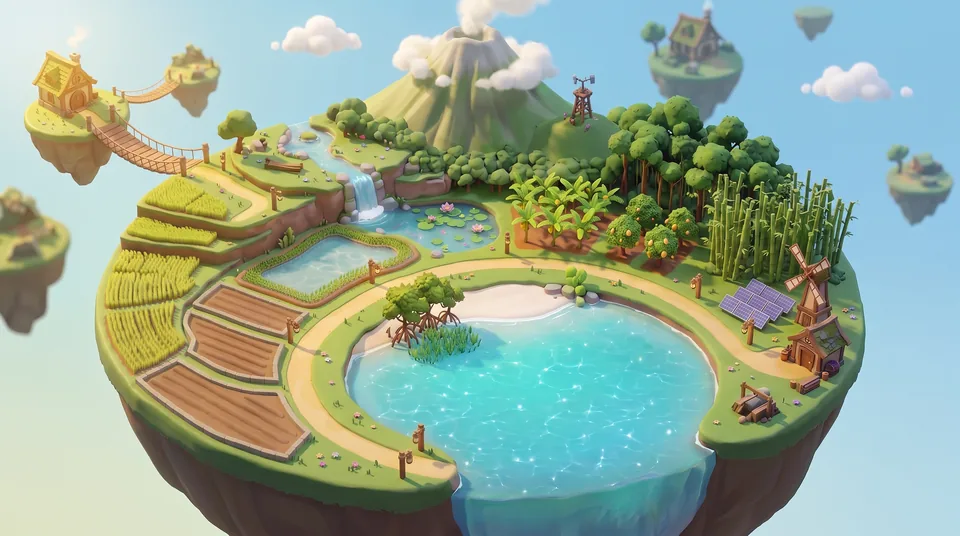
The Lab Valley as students see it by day. Bed spots, the lab bench, the compost bin, the rain-water tank and the zone chips are drawn where partials/valley.js puts them. Numbered rings: bed spots 1-3 every garden has, 4-6 open with harvests. The tank shows only after the Workshop blueprint is passed.
- Careful rungives a seed
- Planton the valley terraces
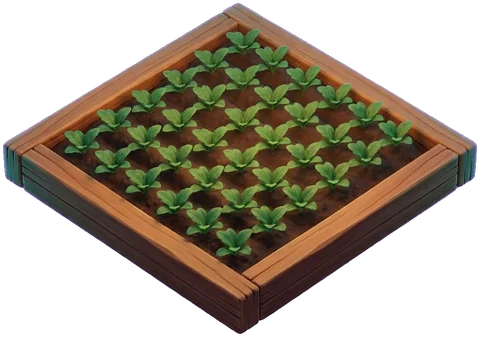 Growin real time; right answers bring sunshine
- Harvestcrops + a plant card
- Cookfills today's plate
- Compostscraps put nitrogen back
Where it grows: the Lab Valley
The Lab Valley is a second island, across a bridge from My Island. It has six parts, called zones. A student opens more zones by practising more, or by reaching a higher Level.
Since 17 October 2026 the garden lives in the Lab Valley, a second, wider island across a rope bridge (a signpost on the west rim of My Island leads there). It has six zones. Each opens when the student reaches a level OR a number of careful runs, whichever comes first, so slower and younger students are not left behind.
Garden beds used to stand on the home island. They now stand at fixed spots on the valley terraces, with whatever was growing in them. The home island keeps its grass for pieces. Beds are not dragged, so they have no layout keys any more.
Since 17 October 2026 island pieces can also stand in the Lab Valley. They are placed freely on the valley's hand-drawn ground mask, like on the islands; zones still under mist are blocked until they open. A piece in the valley counts for night-visitor habitats like anywhere else (see Night visitors).
Up to 5 careful runs a Jakarta day count toward the zones, like the seeds. The first count starts from what the student already did before the valley opened (statue runs, picks, Workshop runs: the highest of these), so nobody starts at zero. Level is the student's practice level.
A ⛶ Full screen button on My Island lays the island or the Lab Valley over the whole device (the Fullscreen API where the browser has it; on iPhone Safari the page layer alone).
Sparkuna testers and HQ observers see everything open (a showcase): all six beds, every crop, a full seed bag, 10 of each crop in the pantry, every zone, and a paddy with 4 fish nearly grown. It only adds; it never takes anything away.
A student's day
New here? Read this first. It is two days of one Grade 5 student, step by step.
An example of one Grade 5 student over two days. The times are made up; the rules are the real ones.
-
Morningat homeOpens My Island: one free seed
The first time the island opens on a day, the student gets 1 free seed. On the very first visit after the garden opened, the student starts with 3 seeds and 3 empty beds.
-
10:00at schoolA careful practice run: one more seed
Every careful run gives a seed, up to 5 a day; a student can hold at most 15. A careful run has 5 or more questions, all answered, a typical (median) answer time of at least 5 seconds, and no answer faster than 2 seconds. A run where every answer is "I don't know this yet" is not a careful run. The score does not matter: a careful run with wrong answers still gives a seed. The same run also counts toward the valley zones.
-
10:15plantingCrosses to the Lab Valley and plants a bed
The student taps an empty spot on the garden terraces and picks one of the open crops. Each seed tile says which part of the plant we eat, for example "We eat its seeds", and the bed shows its soil nitrogen. The companion explains what is happening inside the plant:
-
During the daymore practiceRight answers bring sunshine
Every right answer in a careful run, answered after the bed was planted, shines on that bed. More sunshine means a bigger harvest. Tapping a growing bed shows the time left, the sunshine so far and a "Practise for sunshine" button.
-
Next morningabout 18 h laterHarvest: crops, a plant card and one question
The bed is ripe. It never wilts; it waits for the student. The harvest goes into the pantry, the bed's soil gives up some nitrogen (rice takes 20), and the student reads a plant card with one question from the practice bank. The question gives no points; a wrong answer shows why.
-
Any timekitchenCooks a dish, then composts the scraps
In the Island Kitchen the student cooks a dish from the pantry. Dishes cooked today fill today's Isi Piringku plate; a full plate in one day opens a warung stall for the island. Each dish leaves 2 kitchen scraps for the compost bin, and one scrap puts 20 nitrogen back into a bed.
Try a bed
Move the sliders and watch a plant grow. Time makes it ripe. Right answers make the harvest bigger. Rich soil gives one crop more.
Pick a crop, a grade band, the soil and how long ago it was planted to see the picture and the companion's line a student gets at that moment. Add right answers to see the harvest grow.
Just planted
Eight crops, sorted by the part we eat
There are eight crops. They are sorted by the part of the plant we eat. Students learn plant parts while they choose what to plant.
The eight crops are chosen so that the student's garden book sorts them by the part of the plant we eat: seeds, fruits, leaves and roots. Three are open from the start; the others open with harvests, or sooner with a medal (see Progress). Each card also says what a harvest does to the soil. The small picture is the ripe bed.
Sunshine: right answers decide how much
Every careful run gives a seed, even with wrong answers. Right answers only make the harvest bigger. They never decide if a plant grows.
Sunshine on a bed is the number of right answers in careful runs answered after that bed was planted. One right answer shines on every bed that is growing at that moment, and it keeps counting until the student harvests, so a ripe bed that waits can still get bigger.
Rich soil adds one more crop on top (see Soil nitrogen), so a harvest gives 1 to 4. A rushed run (answers faster than the careful-run test allows) gives no seed and no sunshine. A bumper harvest is remembered per crop: it earns that crop's third star in the garden book.
Soil nitrogen: the nitrogen cycle, hands-on
Each harvest takes some nitrogen out of the soil. Peanuts and compost put it back. Students learn the nitrogen cycle by looking after their own beds.
Every bed has soil nitrogen from 0 to 100. Most harvests take some out (leafy and grain crops are hungry). Peanuts put some back: their root nodules hold bacteria that fix nitrogen from the air. Compost adds more: every cooked dish leaves kitchen scraps, and decomposers turn them into nitrogen plants can take up. The soil changes only at a harvest or with compost.
Try a bed over several harvests
Bed soil: 60
The plant card at harvest
After each harvest the student answers one short plant question for their grade. It gives no points. A wrong answer shows why.
After every harvest the student sees the crop's card: which part we eat and one fact written for the student's grade band. The question comes from the practice bank: a live, plain multiple-choice question (no diagram, no maths markup) of the student's grade in the grade's plant chapters (see Curriculum). The server checks the answer; it gives no points and moves no medal. The last 80 card questions are remembered so later harvests ask new ones.
When the bank has no question for the grade, the card falls back to the garden's own questions: 48 in all (8 crops, 2 per band, written for Grades 1-3, 4-6 and 9-10; Grades 7-8 and 11-12 get their own fact and the Grades 9-10 questions). The demo shows a fallback question. Answer it to see what a student sees.
Island Kitchen and the Isi Piringku plate
Crops are cooked into Indonesian dishes. Each dish fills one part of the Isi Piringku plate, Indonesia’s guide to a healthy meal. Students meet fractions (1/3, 1/6) here.
"What is the harvest for?" Harvested crops (and fish from the paddy) are cooked into seven Indonesian dishes. Each dish fills part of the Isi Piringku plate, the Indonesian Ministry of Health guide taught in schools. The plate is drawn with its real shares, and it is about one meal: it shows only the dishes cooked today (Jakarta day). The kitchen tells students:
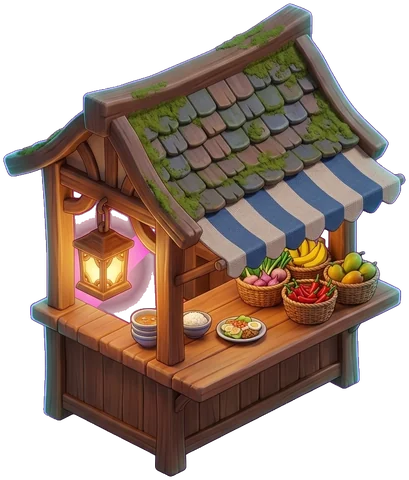
Fill all four parts of the plate in one day to open a warung for the island.
Tap "Cook" to fill today's plate in this demo, and "Next day" to start a new plate. In Sparkuna cooking uses only the ingredients the dish needs, and only when the student chooses to cook; nothing else is ever taken from the pantry. The first full plate opens the warung for good; a cooked dish and the warung can stand on the home island.
The food truck: dishes go to restaurants
Once a day the student sends up to 3 dishes to restaurants. Each dish earns a star. Stars bring new pieces from Indonesian market life.
"What happens to the dishes?" Since 17 October 2026 a food truck parks on the path in the Lab Valley. It takes cooked dishes to restaurants across Indonesia, and the restaurants send rare pieces back for the student's island. The truck tells students:
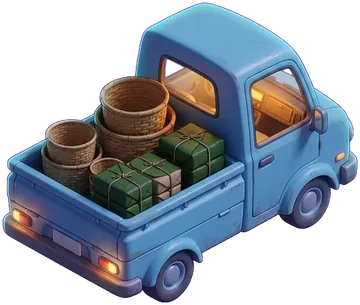
The student loads up to 3 cooked dishes and sends the truck once a Jakarta day. Then it shows "back tomorrow" until the next day. Its stops are named places, for example a warung in Yogyakarta.
Every dish delivered earns 1 star. A balanced order, dishes that together cover 3 parts of the Isi Piringku plate, earns 1 star more. So a trip earns at most 4 stars.
Stars are a count that only grows: no currency, no shop. At set star totals a rare market piece is added to the student's pieces.
Each cooking makes one serving, and a serving goes on the truck once. Sending it never takes away the dish on the island or the warung: the cooked counts stay.
Try the truck
On the truck
Market pieces from the restaurants
Market pieces come only from the truck: they are never on offer as a pick, never open an island and never count toward the island totals. Once owned they stand anywhere a piece can (any open island or the Lab Valley), can be painted like any piece, and stay forever. "Fastest" assumes a balanced order of 3 dishes every day.
The rice-fish paddy (mina padi)
Fish and rice grow together in one field, as Indonesian farmers do (mina padi). Too many fish, or old water, make the water cloudy and the fish grow slowly. Students find the best number, not the biggest.
Zone 2 of the valley opens at Level 3 or 10 careful runs. Fish and rice grow together in one paddy, as Indonesian farmers do: The student puts in a batch of fish fry, keeps the water clear, and catches the grown fish for the kitchen (the protein for pepes ikan). How fast the fish grow depends on the clarity of the water, the thing the student learns to manage.
Try the paddy
Clear 100/100 clarity
The estimate assumes no fresh water is let in while the batch grows; letting fresh stream water in resets the stale count at once. The most fish per day come from the right number of fish, not the most. Fish never die and nothing is lost: murky water only slows them, and it clears when the cause is fixed.
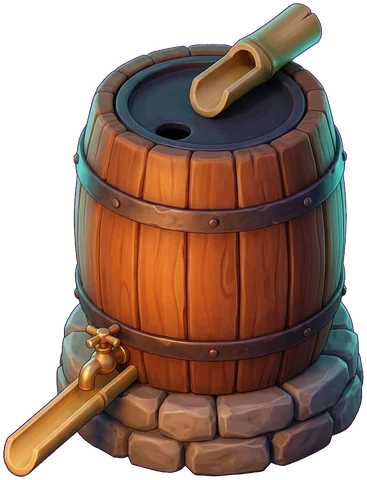
Passing it puts the tank beside the paddy for good: it tops the paddy up with rain, so the water goes stale half as fast and carries one more fish. The Workshop is for Grades 4-12, so Grades 1-3 run the paddy without a tank. The blueprint is never the featured weekly challenge; it has its own card.
31 labs on the lab bench
31 short experiments, at least one in every zone. The first seven: plants and light (Leaf), the nitrogen cycle (Soil), oxygen in the paddy by day and night (Oxygen), bees and fruit in the Orchard (Pollinator), a solar panel in the Energy Yard (Solar), mangroves against the waves (Mangrove) and the weather up the volcano (Weather). Each one has the same steps: predict, test, explain. Every step, every grade band's text and screenshots are on Lab Valley — investigations and missions.
The lab bench stands on the garden terraces. Each investigation is predict, test, then explain, written for the five grade bands. The models are simple and say they are models. The first time a student finishes each one, it gives 2 seeds; after that it is just for learning. No points.
Leaf lab: count the bubbles
Pondweed in a beaker under a lamp. Light falls with the square of the distance (inverse square law); sodium hydrogen carbonate gives carbon dioxide; enzymes work best near 30 °C and are damaged above about 40 °C. The factor in shortest supply sets the rate (limiting factors). Grades 1-3 change only the lamp, with plenty of carbon dioxide and warm water.
Bubbles per minute at each lamp distance
Oxygen lab: the paddy by day and night
Dissolved oxygen over 24 hours: photosynthesis by algae and water plants under the water adds oxygen while the sun is up; fish, algae and microbes respire day and night; the air (and fresh stream water, faster) pulls it back toward 7.8 mg per litre. The student's own paddy is drawn first. Opens with the paddy. Since 17 Oct 2026 the lab runs the same paddy model as the Mina Padi Rescue mission (day 7 of a batch; Cloudy day = cloudy since yesterday): see Lab Valley — investigations and missions.
Soil lab: the nitrogen cycle
The student taps the steps of the cycle (at least 5 of 7), reads each in its band, then looks at the soil numbers of its own beds and answers one question. Shown here for Grades 9-10:
Night visitors: animals of Indonesia
Wild animals of Indonesia visit at night. They come when the valley has their habitat. More kinds of crops bring more animals. Nobody feeds them.
Live since 17 October 2026. "Who came last night?" gives students a reason to come back, and it teaches that wild animals need habitats, not food. Animals visit the student's world at night when it has every habitat they need, and a garden with many kinds of plants brings more of them. Nobody comes for food, and there is no feeding.
How many come: plant variety
Plant variety is the number of different crops growing in the garden beds now (any stage), plus rice when it grows in the paddy. Bare beds bring nobody, and nothing is lost. Seeds come from careful runs, so effort still brings the visitors.
An animal can visit only when the student's world has every habitat it needs. Some habitats every world has; the others come from Lab Valley zones, from Lantern Cove and from a few pieces (table below). So the Visitors book is also a guide: "to meet the slow loris, your world needs a tall forest".
Rare visitors need 3 different crops growing, legendary ones 5. Among those who can come, the chance follows the tier (common 60), and an animal the student has not met yet is 3 times as likely, so the book fills up.
Last night is worked out once, on the first island visit of a later Jakarta day, seeded by the student and the night, so it is the same on every device. The news is shown once; the visitors stay in the valley for that day. Missing a night costs nothing.
The first visit of an animal writes it into the Visitors book and leaves its Nusantara gift if the student does not have it yet. The gift is written to the student's Character Studio items (students.chestLoot); these gifts never come from the daily chest. Later visits leave a thank-you postcard (a count).
The book points to the nearest animal not met yet: the one missing the fewest habitats. No points, no currency: visitors, gifts and postcards only ever add.
The showcase counts as 5 kinds of plants, so testers and HQ observers meet three visitors every night. Their book is not filled in advance, so they see it grow.
What students read about feeding:
Try a world
Tonight
Where each habitat comes from
| Habitat | Comes from | What students read |
|---|
The 29 visitors
Roster version . Habitats in red are missing in the world chosen above. IUCN Red List status as written in the roster. The five heritage companions are the students' own characters, so they never visit.
| Visitor | Tier | Needs these habitats | First-visit gift | IUCN status | In the world above |
|---|
The 11 Nusantara gifts
Progress: more beds, ranks and new seeds
The more a student harvests, the more beds, ranks and crops they get. Nothing ever goes down.
Everything grows with the total number of harvests (rice from the paddy counts too). Nothing goes down.
Garden beds on the terraces
Gardener ranks
Garden book stars per crop: one for the first harvest, one at 5 harvests, one for a bumper harvest.
When each crop opens
A crop opens after a number of harvests, or sooner with a medal in the student's own grade plant chapter (see Curriculum), whichever comes first. Peanuts open early (since 17 October 2026) because they feed the soil.
| Crop | Part we eat | Opens after | Or sooner with |
|---|
The curriculum link: each grade's plant chapter
Each grade has one plant chapter in its practice. A medal in that chapter opens crops sooner, and the plant questions come from it. More links to the syllabus are in Teaching with it.
Each grade has one science chapter about plants or living things in the live practice pool. A Bronze, Silver or Gold medal in that chapter opens new crops sooner, and the garden card offers a 5-question practice run in it ("Help your garden grow"). Plant-card questions come from the chapters and topics in the last column. The companion's lines, cards and labs are written for five grade bands.
| Grade | Band | Plant chapter (medal opens crops) | Plant-card questions from |
|---|
Grade is not Stage: Grade 8 practises from the Stage 9 book, as stored on the practice questions. Grades 9-12 use the Biology book. "Also counts" is a chapter that counted before; a medal there still counts, so nothing opened is closed again.
Teaching with it
What each part of the valley teaches, where it meets the Cambridge syllabus, and questions a teacher or a parent can ask.
31 labs, soil nitrogen, animals and their habitats.
Models built on real science, charts, a paddy that runs in real time.
Workshop blueprints with exact rules: a tank, a bridge, a tower.
Island design, Indonesian food, crafts from across Nusantara.
Fractions on the plate, volume of the tank, ratios, graphs, the best number of fish.
Where it meets the syllabus
| Grades | Cambridge programme and topics | In the valley |
|---|---|---|
| 1–3 Primary Science | Stages 1–3: living things; environments and habitats; plants need light and water. | Leaf lab (light only); seed to ripe crop; habitats. Lines read aloud. |
| 4–6 Primary Science | Stages 4–6: habitats; life cycles of flowering plants; food chains and webs; rocks and soil. | Fair-test bubble counts; decomposers and compost; habitats; the plate. |
| 7–8 Lower Secondary Science | Cells; ecosystems; photosynthesis and the carbon cycle (Grade 8 practises the Stage 9 chapter). | Word equations for photosynthesis and respiration; fair testing; the nitrogen cycle step by step. |
| 9–10 IGCSE Biology 0610 | 6.1.7 6.1.8 investigating light, carbon dioxide and temperature · 6.1.11 limiting factors · 12.2 aerobic respiration · 19.2.9 decomposers · 19.3.2 19.3.3 the nitrogen cycle · 20.4.3 20.4.4 endangered species and conservation | Leaf lab (rate, limiting factors); Oxygen lab (respiration); Soil lab and compost; visitors and IUCN status. |
| 11–12 AS & A Level Biology 9700 | Photosynthesis (limiting factors); energy and respiration; biodiversity and conservation. | Leaf lab: inverse square law, denaturation; Oxygen lab: the dawn minimum; Soil lab in depth. |
Codes: Cambridge IGCSE Biology 0610 syllabus, 2026–2028 (docs/practice-bank/lo/syllabus-codes/0610-2026-2028-tiers.json). Primary and Lower Secondary topics follow the chapters of Sparkuna’s practice bank. Same map as page 8 of the STEAM Integration guide.
- Leaf lab. Why did moving the lamp from 20 cm to 10 cm give about four times the light? What stopped the bubbles rising after that?
- Soil lab. A bed is tired after two harvests. What would you do, and which living things do the work?
- Oxygen lab. Why is the oxygen lowest at dawn and not at midnight?
- Paddy. Why did 8 fish give fewer fish per day than 5?
- Tank. Find three tanks that hold 24. Which needs the fewest wall blocks?
Ask students to bring one result to the lesson: a chart, a soil number or a batch size. Teachers Hub does not show valley progress yet.
- What did you plant this week, and which part of the plant do we eat?
- Which animal visited, and what habitat did it need?
- Is your soil rich or tired? How can you fix it?
- Show me your plate. Which part is still missing?
- What did you predict in the lab, and were you right?
Parents do not need to know the science. Their questions help the child explain it.
Guard rails
The safety rules. No shop and no money. Nothing is ever lost. The garden never gives or takes points. Only careful practice counts.
Sparkuna is live with real students, so the garden and the valley follow the same rules as the rest of the game: effort is rewarded, nothing earned is taken away, and every consequence is soft.
Seeds cannot be bought or traded. They come only from careful runs, the free seed of the day and a first finished lab. Truck stars only grow and are never spent.
A ripe bed never wilts and fish never die. Harvests, cooked dishes, beds, ranks, zones, the warung, market pieces, the Visitors book and its gifts stay. When the beds moved to the valley, the plants moved with them.
Visitors come for habitats and plant variety, never for food. The game says so to students, because feeding wild animals harms them in real life.
Tired soil only slows a new plant (1.25 times); it never gives fewer crops. Murky water only slows the fish, and it clears when the cause is fixed.
Every careful run gives a seed, whatever the score, and every planted bed ripens with at least one crop. Right answers only make the harvest bigger.
Each valley zone opens at a level or a number of careful runs, whichever comes first, so a student who answers more slowly still gets there.
The garden, the paddy, the labs, the truck and the visitors give no points, and the plant-card question is never scored and moves no medal. Points still come only from practice.
Rushed runs give no seeds, no sunshine and no valley runs. Runs stop counting at 5 a day, and a student holds at most 15 seeds, so there is nothing to gain from grinding.
Seeds, growing time, sunshine, soil, the paddy, the zones, truck stars and market pieces, and who visits are worked out by Central Hub Cloud Functions (islandState, gardenAct). The student's device cannot change the garden, the valley or the Visitors book.
Coming next
Zones 3 to 6 open for students already, but most of their experiments are still empty. The subject team will plan them: see Design the next zones.
Planned, not built for students yet.
These zones already open at their level or run count, and their habitats already count for night visitors (). What is not built yet is the zone content itself.
Design the next zones: for the subject team
The subject team plans the experiments. The builders turn each plan into the game. No coding is needed. We learn it in three steps: I do, We do, You do.
We play Sparkuna as a student on a big screen and stop at the ten stops. At each stop we say what students learn. You watch and ask.
About 30 minutesEveryone signs in at www.sparkuna.com with their own account. The subject team are already testers, so everything is open. We plant, run the Leaf lab, look after the paddy and open the Visitors book together.
About 45 minutesEach person takes one zone and plans one experiment on the card below. We build it. You try it first. When you say yes, students get it.
One or two weeks per cardZones waiting for experiments
The questions are only starting ideas. Change them freely. Zone 3 is built first.
Ecosystems and biodiversity. Opens at Level 6 or after 25 careful runs.
- Why do fruit trees need bees and other pollinators?
- What lives in each layer of a rainforest?
- Where does the carbon in a tree go?
Energy and the environment. Opens at Level 10 or after 45 careful runs.
- Which angle gives a solar panel the most energy?
- How does wind speed change a turbine’s power?
- Can water from the stream turn a wheel?
Coasts, oceans and fisheries. Opens at Level 15 or after 70 careful runs.
- How do mangrove roots protect the coast from waves?
- Why do tides go up and down twice a day?
- What lives in a seagrass meadow?
Natural hazards, weather and climate. Opens at Level 20 or after 100 careful runs.
- What can a week of rain and temperature data tell us?
- How does a rock change in the rock cycle?
- Why is soil near a volcano so good for farming?
Eight rules for a good valley experiment
- Predict, test, explain. The student guesses first, then tests, then answers one question.
- Change one thing. One variable at a time; keep the others the same (a fair test).
- Something to read. A number, a count or a chart that the student uses to explain.
- Useful in the valley. The result helps a real choice: what to plant, how many fish.
- Five grade bands. The same idea in easy words for Grade 1 and exact words for Grade 12.
- Soft problems only. Nothing dies and nothing is lost. A mistake slows things down, then it is fixed.
- Honest and Indonesian. A simple model that says it is a model. Indonesian crops, animals and places.
- Wild animals are never fed. Animals come for a habitat. No numbers about how many are left in the wild.
The experiment card
One card for one experiment. Short notes are fine, in English or Bahasa Indonesia; the builders write the student text and the author checks it. Send the card in the team’s WhatsApp group, as a photo or a document.
| Box on the card | What to write |
|---|---|
| Name and zone | Your name, the zone, and a short name for the experiment. |
| The big question | What does the student find out? |
| What the student changes | One thing, and the values it can take. |
| What stays the same | The things that must not change, so the test is fair. |
| What the student reads | A number, a count or a chart. |
| The real science behind it | The rule the model follows. Add a source if you have one. |
| The usual mistake | What students often think, and why it is wrong. |
| How it helps in the valley | Which real valley choice the result helps with. |
| Curriculum link | Programme and code, if you know it. |
| Questions for each band | A predict question and an explain question (with the right answer and why). Start with the band you teach; one band is enough for a first card. |
See a finished card: the Leaf lab (live in zone 1)
| Name and zone | Leaf lab: what do plants need? · Zone 1, Garden Terraces |
| The big question | What makes a water plant give off more oxygen? |
| What the student changes | Distance of the lamp (10, 15, 20, 30, 40, 50 cm); then carbon dioxide (0–3 pinches of sodium hydrogen carbonate); then temperature (10–50 °C). One at a time. |
| What stays the same | The plant, the water, and the two things not being tested. |
| What the student reads | Bubbles of oxygen per minute; at least three trials, each a point on a chart. |
| The real science behind it | Light falls with the square of the distance. The factor in shortest supply sets the rate (limiting factors). Enzymes work best near 30 °C and stop when it is too hot. |
| The usual mistake | “More light always means more bubbles.” With very little carbon dioxide, more light changes nothing. |
| How it helps in the valley | It explains why crops need sun, and why the paddy has less oxygen on a cloudy day. The first finish gives 2 seeds. |
| Curriculum link | IGCSE Biology 0610: 6.1.7 6.1.8 6.1.11 |
| Grades 9–10: predict | “Moving the lamp from 50 cm to 10 cm with very little carbon dioxide in the water. The rate will…” Rise, then level off · Keep rising the whole time · Fall |
| Grades 9–10: explain | “With no sodium hydrogen carbonate, moving the lamp closer than 20 cm gave no more bubbles. What was the limiting factor?” Carbon dioxide concentration · Light intensity · The number of leaves. Why: once there is plenty of light, more light changes nothing; the factor in shortest supply limits the rate. |
| Grades 1–3 | One question, read aloud: “If the lamp comes closer, what will the plant do?” They change only the light. |
The texts are the live ones from Students Hub/partials/lab.js (leaf: predict + conclude, bands young and igcse).
Status
- Live · 16 Oct
Garden, kitchen and plate (v1 and v2): seeds, sunshine, eight crops, ranks, beds; then five grade bands, plant-card questions from the bank, real growing times, read-aloud for Grades 1-3, the Isi Piringku shares and the plate of the day. Testers and HQ observers see the showcase garden.
- Live · 17 Oct
Lab Valley Release 1: the valley scene and six zones, beds moved to the terraces (plants kept), the rice-fish paddy and pepes ikan, the rain-water tank blueprint, soil nitrogen with peanuts and compost, the three labs, and full screen on My Island.
- Live · 17 Oct
Night visitors, food truck, pieces in the valley: 29 animals that come for habitats and plant variety, with 11 Nusantara gifts for the Character Studio and postcards after; the food truck with stars and 6 market pieces; pieces placed in the Lab Valley outside the misty zones.
- Next
Zones 3-6 (orchard, energy yard, mangrove coast, volcano lookout) are under mist with what opens them; their content is not built yet and will come from the subject team’s experiment cards (Design the next zones), orchard first. Earlier ideas not scheduled: schoolmates watering each other's gardens, and the weather of the day.
Page written 16 October 2026, rewritten 17 October 2026 for what is live (night visitors and the food truck added the same day). Plain-words layer added the same evening after the subject team’s feedback: an In plain words box on every section, Start here, Word list, Ten stops, Teaching with it, and Design the next zones.